
Outsourced Accounting Services: Understanding Core Functions And Scope

Service Types and Functional Coverage for Outsourced Accounting
Outsourced accounting arrangements commonly group services into functional types: transaction processing (bookkeeping), payroll services, accounts payable/accounts receivable management, reconciliations, and periodic financial reporting. In the United States, these categories often map to operational deliverables such as weekly payroll runs, monthly reconciliations against bank statements, and quarterly management reports. Businesses may select full-service arrangements that cover multiple functions or single-service engagements focused on a specific process. Typical engagement documents define frequency, deliverables, and escalation points for exceptions and discrepancies encountered during processing.
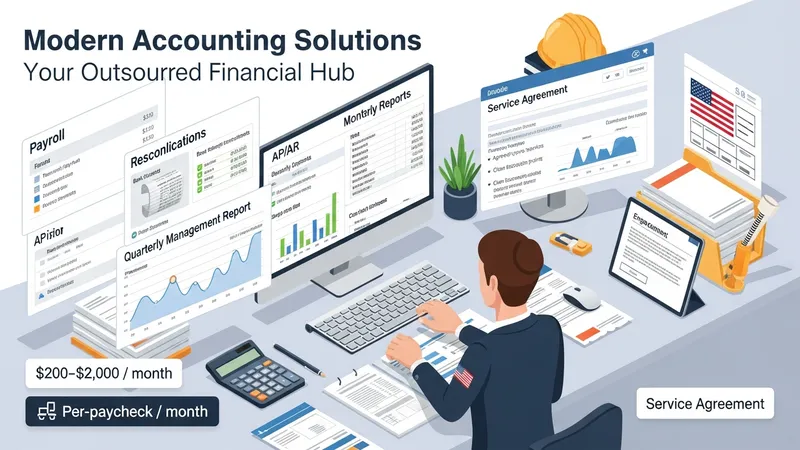
Pricing for these service types can vary widely in the U.S. market depending on transaction volume, complexity, and level of automation. For example, basic monthly bookkeeping packages for a small business may typically range from about $200 to $2,000 per month, while payroll processing fees may be charged per paycheck plus a base fee, often depending on the number of employees. These ranges are indicative and may change according to regional labor costs, integration requirements, or need for specialized industry reporting such as cost accounting for construction contractors.
Providers offering payroll services in the United States commonly address tax filing obligations at federal and state levels. Firms that manage payroll may reference Department of Labor guidance for wage and hour considerations and the Internal Revenue Service for federal tax deposits and returns. When evaluating functional coverage, businesses often consider whether the provider will file returns on their behalf, prepare year-end forms such as W-2s and 1099s, and support multi-state payroll requirements if employees work across states with different withholding rules.
Operationally, outsourced AP/AR services may include electronic invoicing, vendor onboarding, payment execution via ACH or check, and automated reminders for past-due receivables. In the U.S., providers may integrate with banking partners and use Automated Clearing House (ACH) networks for payments. Firms considering outsourcing these functions often plan for initial mapping of vendor and customer master files, establishment of approval hierarchies, and periodic review cycles to reconcile outstanding items and reduce aged payables or receivables balances.