
Voice AI Support: How Conversational Technology Enhances Customer Service

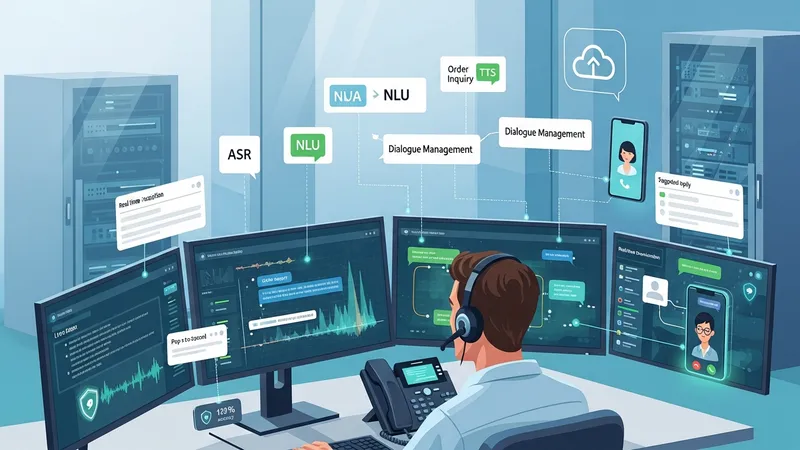
Voice-based artificial intelligence for customer support refers to software systems that process spoken language to assist or automate interactions between customers and service organizations. These systems typically combine automatic speech recognition (ASR) to convert audio to text, natural language understanding (NLU) to interpret intent, dialogue management to decide next steps, and text-to-speech (TTS) to produce spoken responses. In United States operational contexts, voice AI is often integrated with contact center infrastructure to handle routine queries, provide self-service, or assist human agents by surfacing relevant information during live calls.
Implementation approaches vary by use case and scale. Some contact centers use cloud-hosted voice AI modules from major providers, while others deploy on-premises components for integration with legacy telephony. Common use cases in the United States include automated call routing, interactive voice response (IVR) systems that accept natural speech, virtual agents that handle inquiries, and agent-assist tools that offer real-time transcription and suggested replies. Each approach typically balances accuracy, latency, privacy controls, and integration complexity.
- Amazon Lex — cloud service that provides ASR and NLU components usable within US contact center deployments; commonly used for building conversational interfaces.
- Google Dialogflow — platform for creating conversational agents with speech and text inputs; often integrated with telephony in US solutions.
- Microsoft Bot Framework / Azure Cognitive Services — set of tools for voice bots and speech services that are frequently referenced in US enterprise projects.
Speech recognition and language understanding are foundational technical elements. ASR systems convert audio captured from telephone or VoIP channels into text, and their performance can vary with speaker accent, background noise, and audio codec used by US telephony networks. NLU models then map transcribed text to intents or slots that represent user goals or entities. Developers often measure performance with metrics such as word error rate (WER) for ASR and intent classification accuracy for NLU, noting that performance observed in controlled tests may differ from live call environments and typically requires ongoing tuning.
Virtual assistants and IVR systems may be configured for different levels of autonomy. In many US deployments, voice agents handle routine requests like account balance checks, scheduling confirmations, or status inquiries, while escalation strategies keep a human agent available for complex or sensitive matters. Call routing logic often integrates voice AI outputs with contact center routing rules so that recognized intents can trigger transfers to subject-matter specialists. Organizations typically monitor fallback rates and escalation frequency to refine decision thresholds.
Multilingual support and accessibility are common operational considerations in the United States. Voice AI solutions may include models trained on multiple languages or dialects and use language detection to route callers appropriately. Accessibility features such as real-time captioning or support for assistive communication methods can help organizations comply with accessibility expectations or regulations. Language model selection and testing in representative US demographics are often necessary to reduce bias and improve coverage for diverse caller populations.
Analytics and integration determine how voice AI contributes to broader customer service workflows. Captured transcripts, intent distributions, and call metadata can feed dashboards, workforce management, and quality-assurance processes. Integrations with CRM systems, ticketing platforms, and workforce optimization tools allow agents to see prior bot interactions and reduce repeat information requests. Data governance and privacy considerations are commonly factored into design decisions, especially where voice recordings may contain personally identifiable information (PII).
When evaluating voice AI support, organizations often consider trade-offs between on-premises and cloud-hosted components, expected call volumes, and compliance obligations under US regulations. Pilot deployments and incremental rollouts are commonly used to validate real-world performance and user experience before broader adoption. The next sections examine practical components and considerations in more detail.