
Cyber Security For Firms: Key Principles For Protecting Business Data

Network architecture and endpoint protection for business data safeguards
Network architecture can limit exposure by segmenting systems based on function and sensitivity. In U.S. settings, firms commonly separate user workstations, servers, and externally facing services into distinct zones, applying tailored firewall and access controls. Secure remote access solutions, such as VPNs or zero-trust network access models, may be used to authenticate devices and users before granting connectivity. Documentation of network boundaries and data flows may assist incident response teams in tracing potential impact.
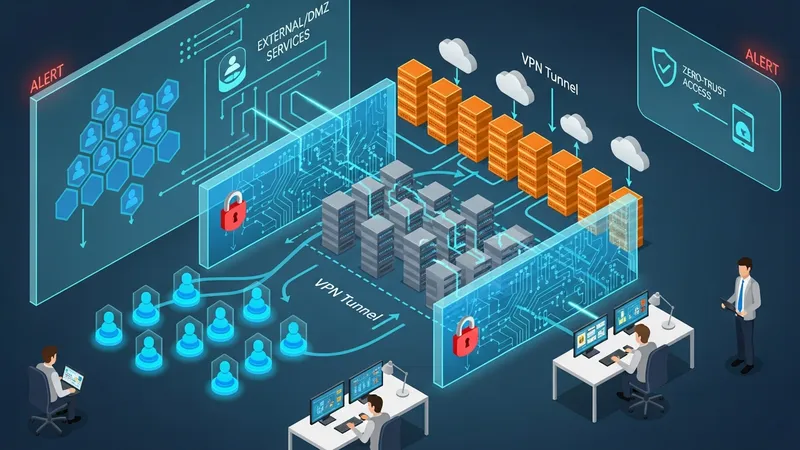
Endpoint protection strategies may combine device hardening, centrally managed anti-malware, and endpoint detection and response (EDR) tooling. U.S. organizations sometimes adopt EDR to collect process and connection telemetry that could indicate suspicious behavior. Endpoint configuration baselines and patch management schedules typically reduce exploitability of known vulnerabilities, though scheduling and testing are often needed to align with business operations.
Monitoring and logging of network and endpoint activity can support detection of anomalous patterns. Security information and event management (SIEM) systems are used in many U.S. firms to centralize alerts and support correlation across sources. Logging retention choices are often influenced by storage costs and regulatory retention requirements, and firms may apply tiered retention policies to retain high-value telemetry longer for forensic use.
Operational considerations include balancing visibility with privacy and cost. For example, capturing detailed telemetry across all endpoints may aid detection but create storage and review burdens. Many U.S. companies pilot controls on representative subsets before broad rollout and use threat intelligence feeds from CISA or sector-specific sources to prioritize controls against prevalent adversary tactics.