
Data Leakage: Overview Of Risks, Causes, And Security Implications

Types and common causes of data leakage in United States environments
Data leakage in United States contexts can be categorized by vector: human error, technical misconfiguration, insider misuse, and third-party exposures. Human error often involves mistaken email recipients, incorrect sharing permissions in collaboration platforms, or use of unsanctioned file-sharing services. Technical misconfiguration examples include public cloud object storage with excessive permissions or unsecured APIs that return sensitive fields. Insider misuse may be malicious or negligent and can involve unauthorized copying of data to personal devices. Third-party exposures occur when vendors or integrators with legitimate access have weak controls or suffer compromise, creating an indirect path for data to leave an organization.
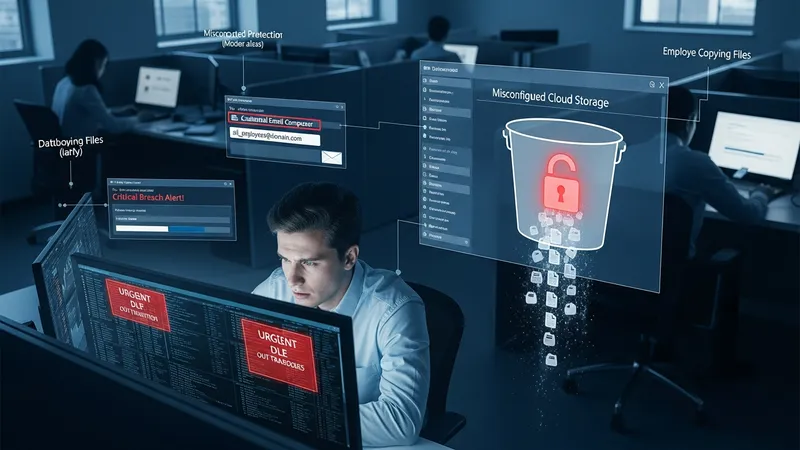
Each cause may create different detection and remediation challenges. Human-origin incidents can be fast-moving but limited in scope, and may be detected through user activity monitoring or DLP alerts. Misconfiguration incidents can expose large datasets and may be discovered through routine scans, external researchers, or regulatory reporting. Insider misuse often requires behavioral analytics, access review processes, and stronger separation of duties to detect. Third-party risks typically require contractual controls and periodic reassessment of vendor security posture to identify latent exposures in supply chains operating within the United States.
Common patterns observed in United States incident reports show that cloud misconfigurations and improper access controls have been prominent in recent years. For organizations using shared services or public cloud providers, automated inventory and configuration monitoring may surface unintended exposures such as public object storage or overly permissive IAM policies. While automation can reduce manual error, it may also introduce complexity; units within an organization may provision resources independently, creating inconsistent baselines that allow leakage unless governance is maintained.
Considerations for addressing these causes often involve layered controls and process adjustments. For example, training programs may reduce inadvertent disclosures, while pre-deployment configuration checks and automated scanning can address technical misconfigurations. Role-based access control and just-in-time access provisioning can limit opportunity for insider misuse. In United States regulatory contexts, specific data types may require technical safeguards and documentation, making it important to align preventive measures with compliance obligations and operational realities.