
Inventory Tracking Systems: How Real-Time Stock Monitoring Works

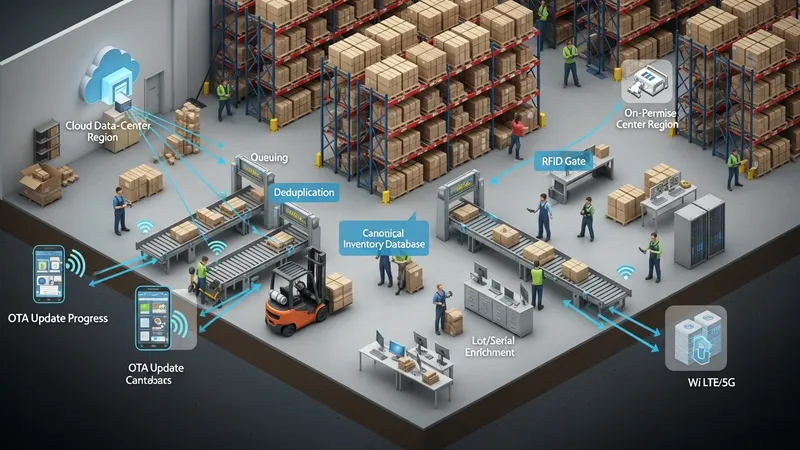
Technology components in Inventory Tracking Systems
The architecture of modern inventory tracking implementations often distinguishes edge capture hardware from processing and storage layers. Edge devices include handheld barcode scanners, RFID readers, fixed cameras, and mobile devices used by staff. In U.S. warehouses, common practice is to harden devices for industrial environments and to use device management tools to apply updates. Processing layers may run in private data centers or public cloud regions located in the United States; they provide queuing, deduplication, enrichment (for lot and serial handling), and the canonical inventory database. Decisions about on-premise versus cloud processing typically balance latency, regulatory requirements, and integration complexity.
Network connectivity is a critical component that may influence perceived “real-time” freshness of data. In U.S. retail stores and distribution centers, Wi‑Fi is frequently used for handheld scanners and fixed readers; cellular LTE/5G can be used for mobile sites or vehicles. Where connectivity is intermittent, devices often buffer events locally and sync when connections resume. System designers often include health monitoring for readers and gateways to detect offline hardware early; these monitoring streams can be routed to operational dashboards used by facilities teams rather than serving as prescriptive directives.
Middleware and integration layers translate raw capture events into inventory transactions. Common patterns in U.S. implementations use message brokers and microservices to accept varying input formats, normalize SKU and location identifiers, and apply business rules such as reservations or allocations. Mapping of third-party identifiers to internal product master records is frequently required when integrating suppliers or partners. These mapping tasks often require a governance process to reduce mismatches and may be supported by master data management tools.
Storage and retrieval choices affect how quickly users can obtain aggregated views and historical traces. Cloud-native databases and time-series stores are often used for event logs in U.S. deployments, enabling queries for recent transactions and for auditing. Data retention policies—how long raw events are kept—may reflect operational needs and compliance or cost trade-offs. Designing storage for both current-state queries and occasional deep forensic analysis tends to be a practical consideration rather than an absolute technical requirement.