
Inventory Tracking Systems: How Real-Time Stock Monitoring Works

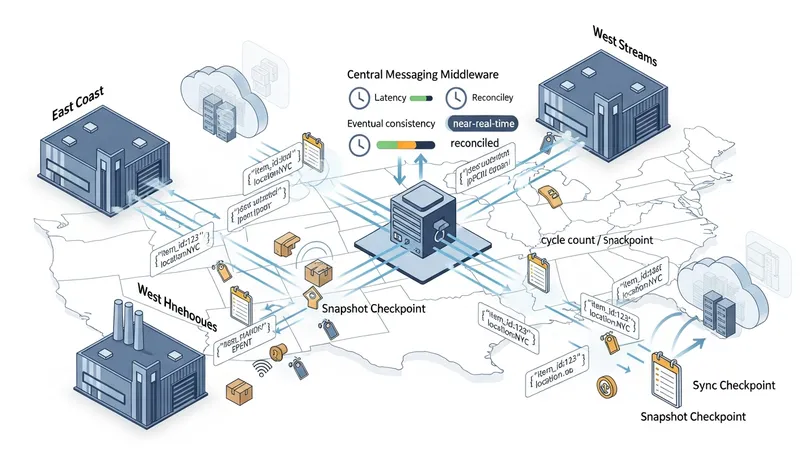
Data synchronization and cloud architectures for real-time monitoring
Maintaining synchronized inventory across multiple locations typically involves patterns that reconcile event-driven updates with periodic full-state checks. In U.S. supply chains, systems may use event streams to reflect immediate changes while scheduled inventory snapshots or cycle counts provide correction points. Eventual consistency models are common: systems may present a near-real-time view that is typically accurate for operational decisions but might be reconciled later against definitive records. Architecture choices such as whether to use push or pull synchronization, the chosen messaging middleware, and the format of events (for example, JSON or EPCIS) influence latency and operational complexity.
Cloud providers with U.S. regions are often used to host inventory services because they offer managed storage, messaging, and analytics tools that can scale with peak demand. When architecting in this environment, teams typically plan for multi-region redundancy to meet availability expectations and to reduce latency for geographically dispersed users. Data sovereignty and contractual requirements within the United States can influence whether data is stored in a single region or replicated. Such design choices affect recoverability and the operational overhead for maintaining synchronized copies.
API design and versioning are important in multi-vendor environments where scanners, WMS, POS, and carrier systems all exchange inventory-related messages. In U.S. integrations, it is common to expose RESTful APIs for transactional updates and webhooks for event notifications, while message queues may be used for larger-scale event streams. Considerations often include idempotency handling, rate-limiting, and schema evolution approaches that allow vendors to update clients without disrupting operations. Planning for backward compatibility and clear schema contracts is typically emphasized to reduce integration churn.
Latency targets are usually set according to business requirements: store replenishment and online order fulfillment often require second-to-minute freshness, while accounting systems may tolerate longer delays. In U.S. retail chains, systems frequently separate the operational, near-real-time inventory view used for fulfillment from the financial inventory view used for reporting and cost accounting. This separation allows operational systems to prioritize fast updates while periodic reconciliations ensure alignment with ledgers and regulatory reporting. These design trade-offs are framed as considerations rather than prescriptive mandates.