
Inventory Tracking Systems: How Real-Time Stock Monitoring Works

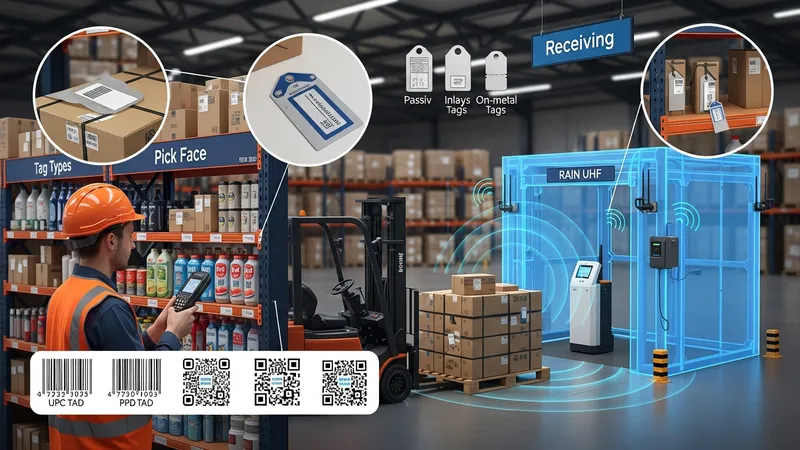
Identification methods: barcode and RFID considerations in Inventory Tracking Systems
Barcodes remain the most widely used identification method in U.S. retail and many distribution settings because they are low-cost and supported by mature scanning ecosystems. 1D barcodes (UPC) and 2D codes (QR, DataMatrix) are common on consumer goods and on pick faces. Barcode scanning generally requires line-of-sight and a deliberate scan action by staff, which can limit throughput in high-volume contexts but provides straightforward traceability for unit-level movements. Maintenance considerations include label durability, print quality, and periodic verification of code readability during receiving and replenishment tasks.
RFID offers advantages where non-line-of-sight reads and batch processing are valuable, such as rapid store-level inventory counts or pallet-level tracking in warehouses. U.S. deployments often adopt RAIN RFID for passive UHF use, following EPC standards for item-level event reporting. Practical considerations include tag selection (on-metal, embedded, or inlays), reader placement to avoid dead zones, and site surveys to model tag read performance. Tagging strategies—polybagging, case-level, or item-level—affect both accuracy and cost and are frequently piloted to establish return-on-effort expectations rather than assuming uniform outcomes.
>
Reader and antenna placement, power settings, and environmental factors (metal shelving, liquids) can substantially influence RFID reliability in U.S. facilities. Site surveys and phased rollouts are commonly recommended to identify interference patterns and to refine read zones for receiving docks and conveyor lines. Barcode systems may require different physical workflows, such as scan tunnels or fixed reading points, to achieve higher throughput. Choosing between barcode and RFID methods typically depends on throughput needs, SKU unit economics, and the operational benefits expected from automation.
Hybrid approaches—using barcodes for certain flows and RFID where it is cost-effective—are common in the United States. For example, a retailer might use barcodes for low-cost items while tagging apparel with RFID to support rapid store-level inventory counts. Integration of both data streams into a single inventory platform requires mapping event types to consistent inventory transactions and maintaining a product master that references both barcode and EPC identifiers. These integration and master-data considerations often drive pilot scope and the pace of broader rollouts rather than representing fixed deployment rules.