
MRPeasy Inventory: Overview Of Inventory Management Capabilities For Manufacturers

MRPeasy Inventory: Material planning and production scheduling
Material planning in manufacturing inventory systems typically starts from the bill of materials and a master production schedule. Planning functions can explode BOMs to determine component requirements and may create suggested purchase orders or production work orders based on demand. For U.S. manufacturers, planning tools may need to account for domestic lead times, supplier minimum order quantities, and transit times, which can affect safety stock calculations and order timing. Planning outputs often include component shortage lists and planned receipts to inform procurement activity.
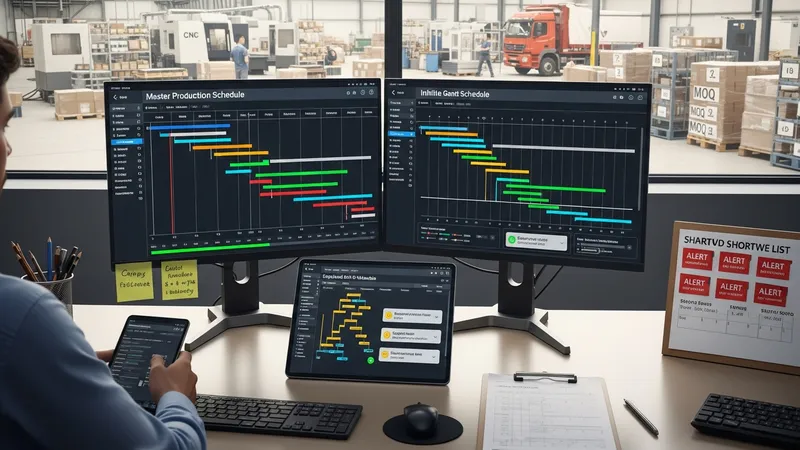
Production scheduling features may provide finite or infinite scheduling views to help planners sequence work on available capacity. Finite scheduling allocates operations against actual machine or labor capacity, which can help identify bottlenecks and realistic completion dates. Infinite scheduling typically shows an unconstrained view of planned start and finish dates based on demand; planners often use this as a baseline before applying capacity constraints. Scheduling data commonly integrates with shop-floor reporting tools that record actual start/stop times and operation completions.
Routing and operation definitions in the inventory-production linkage describe the sequence of steps and resource requirements for manufactured items. These definitions inform material issuing and labor allocation when a production order is released. In U.S. small manufacturing environments, digital routing can replace paper traveler packages and reduce transcription errors; it also allows for capture of operation-level yields and scrap, which can feed into variance analysis and continuous improvement efforts.
Lead time management and supplier performance tracking are typically part of material planning considerations. Recording supplier lead-time variability and on-time delivery metrics may help planners set more accurate reorder points. U.S. manufacturers often track supplier metrics and may use reported delivery performance to adjust planning buffers. Systems that allow users to tag alternate suppliers or specify expedited procurement options may support responsiveness when supply disruptions occur.