
Voice AI Support: How Conversational Technology Enhances Customer Service

Operational impacts: call routing, virtual assistants, and multilingual support
Call routing enhanced by voice AI can shift how work is distributed in US contact centers. Intent classification can be used to pre-route calls to specialized teams or to present agents with context derived from the caller’s initial interaction. When virtual assistants handle routine interactions, supervisors often observe changes in contact volume patterns and may adjust staffing models. Organizations in the United States may track metrics such as containment rate (percentage of interactions resolved by automation) and transfer rate to understand operational effects and to recalibrate routing thresholds.
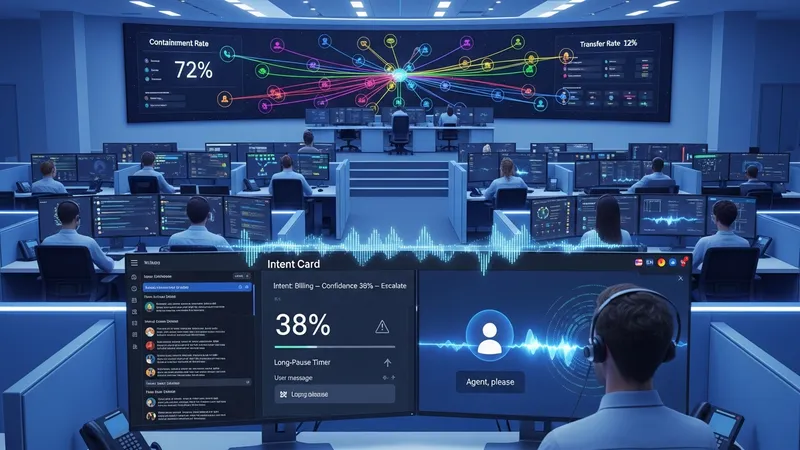
Virtual assistants intended for the US market are frequently designed with escalation strategies to hand calls to human agents for complex or sensitive issues. These strategies commonly combine signals such as repeated failed intent recognition, long pauses, or explicit user requests for an agent. From an operational perspective, teams consider the visibility of bot interactions in agent desktops so human agents can see prior steps taken by the assistant, minimizing redundant questioning and improving average handling time in an integrated workflow.
Multilingual support is a practical requirement for many US service organizations. Commonly, deployments include US English and Spanish models, and may add additional languages according to customer demographics. Language identification, regional dialect handling, and culturally appropriate phrasing are areas of focus. Organizations often pilot language-specific models and measure separate accuracy metrics per language to ensure equitable performance and to identify where targeted data collection or model adaptation is needed.
Accessibility and regulatory considerations intersect with routing and virtual assistant design. In the United States, accessibility expectations may lead to offering alternative channels or real-time captioning for callers who are deaf or hard of hearing. From an operational standpoint, these features may require additional integrations and monitoring. Teams commonly document fallback policies and agent responsibilities to handle cases where automated assistants cannot provide an adequate experience, ensuring consistent service across channels.