
Welding Equipment Basics: Essential Tools And Their Functions Explained

Welding Power Sources and Their Functions
Power sources convert incoming electrical supply into controlled energy suitable for different welding arcs and processes. In the United States, common categories include transformer-based units that provide robust, simple output characteristics and inverter-based systems that typically offer lighter weight, finer control, and programmable settings for tasks such as pulse TIG. Constant voltage outputs are often paired with MIG processes for steady wire feed control, while constant current outputs are commonly associated with TIG and stick processes where current stability matters during electrode manipulation. Considerations like input voltage (120V versus 240V), available amperage, and duty cycle ratings usually influence whether a machine is used on-site or in a fabrication shop.
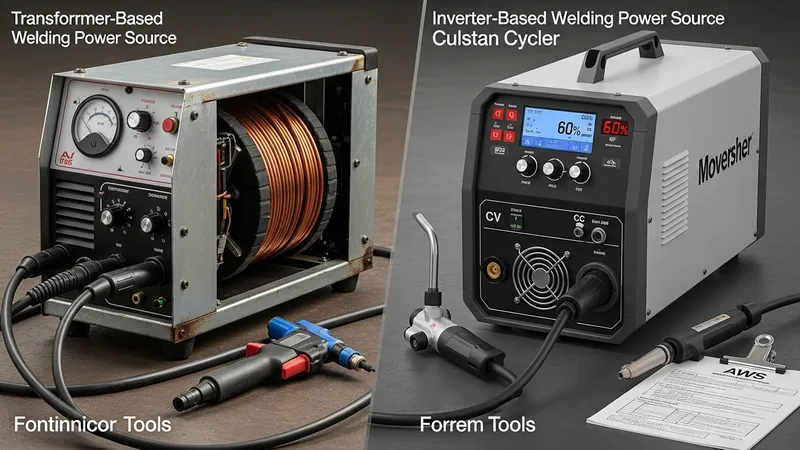
Duty cycle specifications—expressed as a percentage of a 10-minute period at a given amperage—give an indication of how long a machine may operate before requiring cooldown. In U.S. industrial practice, machines with higher duty cycles are typically chosen for production welders to meet throughput needs. Users in construction or maintenance tending to intermittent welds may prioritize portability and simple setup. Manufacturer datasheets and industry references such as the American Welding Society provide technical comparisons that are often consulted for application matching rather than definitive prescriptions.
Arc control and ancillary features can affect weld quality and operator handling. For MIG welding, wire feed speed and voltage interact to shape bead profile and penetration; for TIG, high-frequency start and gas preflow/postflow timing can influence arc starts and tungsten contamination risk. Electronic controls in modern inverters may allow presets for common metals and thicknesses; these settings commonly appear in U.S. fabrication practices to reduce variability between operators without implying a single required configuration for all jobs.
Power delivery considerations also include site electrical capacity and grounding practices in the United States. Heavy industrial equipment may require three-phase service or dedicated circuits, while portable units often run on single-phase 240V. Proper grounding, cable sizing, and adherence to the National Electrical Code (NEC) and local electrical authority guidance are often referenced during installation to reduce electrical hazards and ensure reliable equipment operation.