
Phoenix Air Conditioning Service: Key Factors To Consider In The Desert Climate

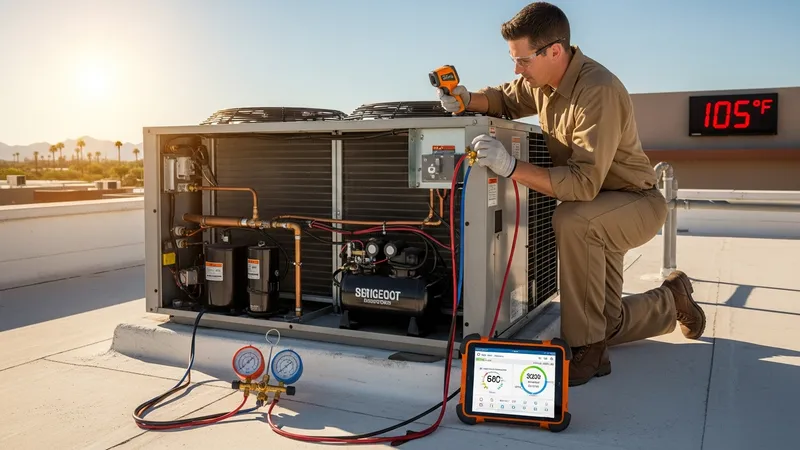
Heat load and cooling performance considerations in the Phoenix-area climate
High daytime temperatures and intense solar radiation in Phoenix-area climates often increase hourly cooling loads compared with milder regions. Peak daytime highs can exceed 100 °F during summer months, which typically leads to extended daily compressor operation. System sizing and performance measurements therefore commonly account for longer duty cycles and higher sensible cooling demands. When assessing capacity, service professionals may consider factors such as roof reflectivity, window orientation, and internal gains from appliances and occupancy. These elements can influence whether a system is operating near its intended performance envelope under local summer conditions.
Load-related service checks frequently include evaluation of refrigerant charge relative to manufacturer specifications under real operating conditions. Long run times can mask under- or overcharge effects on measured temperature split, so careful measurement and interpretation are usually necessary. Electrical components such as contactors and capacitors may show earlier wear because of frequent start-stop cycles or prolonged high-load operation. Professionals and property managers often track runtime hours as an operational indicator when planning inspections and component life expectancy estimates.
Performance under high ambient temperatures may alter the practical benefits of specific equipment features. For example, variable-speed fans and compressors can allow more precise control of airflow and capacity during part-load operation, which commonly occurs early and late in the cooling season. Multi-stage or inverter-driven systems may therefore present different maintenance profiles compared with single-stage equipment. Consideration of such differences is typically framed in terms of likely operating patterns and potential trade-offs in maintenance complexity rather than as definitive superiority.
Local energy rates and utility programs in many U.S. jurisdictions influence how service and performance choices are evaluated. In Phoenix and surrounding areas, utilities sometimes publish seasonal load profiles and rebate program details that affect the relative economics of efficiency measures. While such information can inform maintenance and upgrade planning, decisions commonly depend on building-specific factors and measured system performance rather than general claims about savings. Readers may consult local utility resources for region-specific guidance without interpreting those resources as prescriptive.