
Voice AI Support: How Conversational Assistants Enhance Customer Service

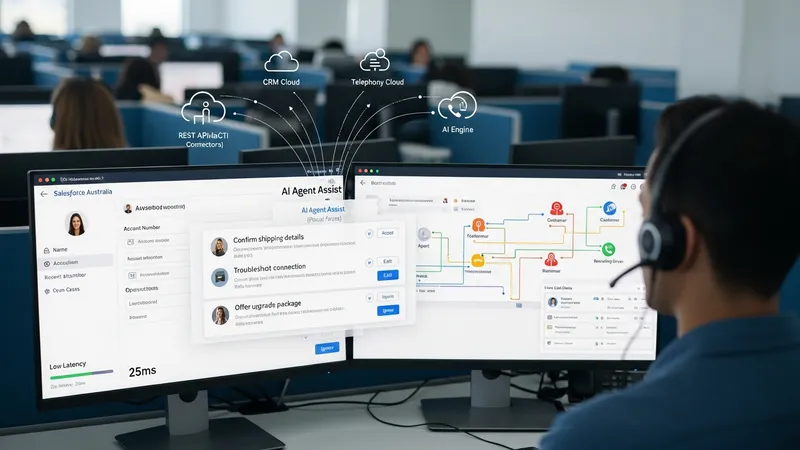
Integration, analytics, and workforce interaction in Australian service workflows
Integrating voice AI with existing Australian service workflows typically involves CRM connection, telephony bridging, and analytics pipelines. Common integration patterns include REST APIs, webhook-based eventing, and CTI connectors for platforms such as Salesforce Australia or local contact-centre systems. Analytics components generate transcripts, intent logs, and KPI dashboards that feed workforce management systems to inform staffing and queue management. Organisations often pilot integrations on limited queues to validate data flows and to ensure transcripts align with downstream reporting and quality frameworks used by Australian contact-centre teams.
Workforce interaction models vary: some Australian contact centres adopt blended approaches where agents handle complex calls and AI handles routine contacts; others implement agent-assist tools that provide real-time prompts and suggested responses. Real-time assistance requires low-latency pipelines and clear HMI design so agents can accept, edit, or ignore suggested content. Training and change-management are typically part of deployments, with staff briefings on how automated transcripts and suggestions are produced and how to correct AI outputs in live interactions.
Analytics often drive continuous improvement of voice AI in Australian operations. Monitoring common failure modes and retraining models with newly annotated calls can reduce misunderstanding rates over time. Quality assurance practices may include periodic human review of automated transcripts, spot checks for compliance phrases required by Australian regulators, and measurement of customer experience indicators such as post-call survey responses. These practices typically support incremental accuracy improvements and help maintain alignment with business objectives.
Operational scaling considerations include telephony throughput, model inference capacity, and storage for recorded interactions. Australian deployments commonly assess peak call volumes, regional redundancy, and disaster recovery for continuity. Organisations may choose local cloud regions to meet latency and data residency needs, or adopt hybrid architectures where telephony remains local while AI inference occurs in cloud regions that meet regulatory and performance criteria. These considerations feed into procurement and capacity planning processes.